Assembly and access
Clips, doors, slides and rails are built into the printed geometry. The enclosure itself does more of the work.
Our vision software comes with hardware selected to run it. Choose a complete appliance, a network booster or an AI camera to suit your application.
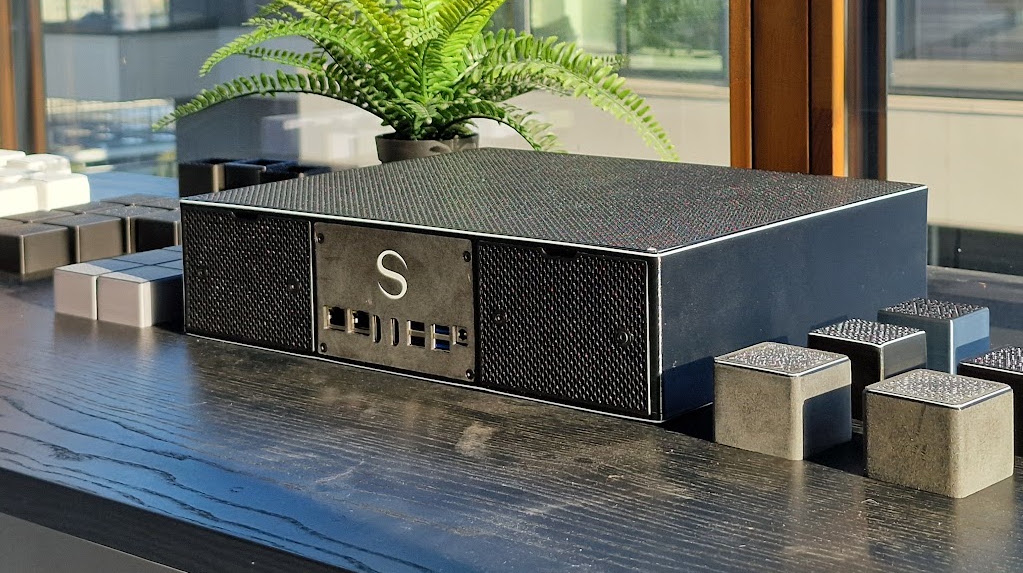
A complete, self-contained device that runs both our vision software and your application. Keep the whole solution in one place.
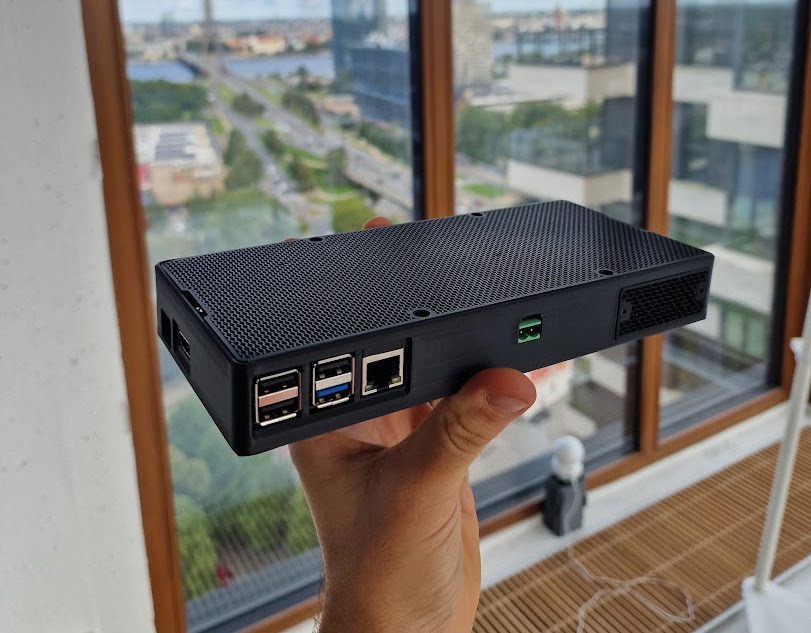
Add video processing power to your existing setup. Place the booster on your network while your application keeps running on its own machine.
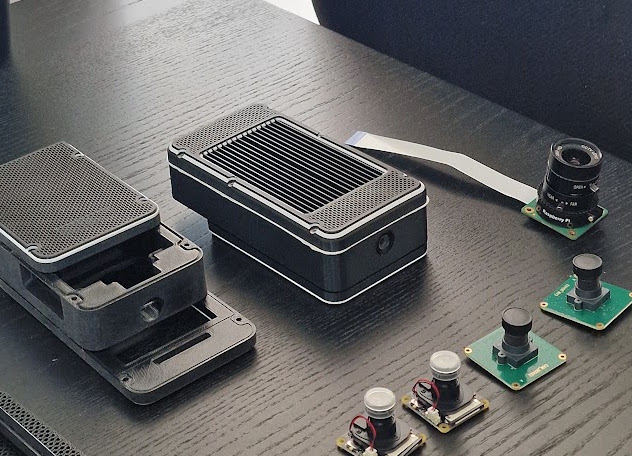
Work with very high-resolution images straight from the sensor, before video compression removes detail. More information at the source, to see further into spacetime.
Start with one device or combine several. A camera processes images where they are captured, while a booster or appliance provides processing elsewhere in your system.
Combine devices into a solar system. Deploy a galaxy of applications.
3D-printed. Shaped for the job.
3D printing lets us shape the space around every component. The enclosure evolves with the software and electronics. Iterations are quick.
An air duct curves toward the heat. A rail guides a board into place. A door puts access where it is needed. When the product changes, we reshape that space, print and iterate.
Complex shapes serve practical purposes. The printed geometry provides structure, access, airflow and visual character, combining several functions in the same object.
Clips, doors, slides and rails are built into the printed geometry. The enclosure itself does more of the work.
Vents, air ducts and porous filter structures are designed into the housing, alongside the electronics they serve.
Structural features also define how the product looks. Shapes, colours and surface finishes are part of the same design.
Different environments call for different properties. Material, geometry and finish are selected together.
Some materials offer greater toughness, others tolerate higher temperatures or more demanding chemical environments. The choice follows the job.
Modern 3D printing produces high-quality surface finishes and combines shapes and colours. For water-tight enclosures, material selection, the print process and sealing are designed together, with testing against the requirements of the application.
Recyclable materials and materials with biodegradable properties are options where suitable. The choice also depends on the product’s working life and the recycling or treatment available.